Views: 167 Author: Site Editor Publish Time: 2026-08-13 Origin: Site
Buyers evaluating glacial acetic acid require precise chemical specifications rather than basic definitions. Industrial sourcing demands accurate data to ensure consistent production cycles. You need a reliable chemical foundation to maintain high product quality. Selecting the wrong grade immediately impacts downstream manufacturing output. Furthermore, improper storage and handling quickly introduce severe safety hazards and costly logistical bottlenecks.
We will explore the critical purity benchmarks separating this anhydrous chemical from standard aqueous solutions. You will learn practical procurement strategies to streamline your sourcing protocols. We will outline essential handling procedures to secure your supply chain. These insights help protect your facility infrastructure. Ultimately, you will gain actionable knowledge to integrate this vital raw material safely and effectively.
Purity Benchmark: True glacial acetic acid must contain less than 0.2% water; any dilution alters its freezing point and chemical reactivity.
Logistical Challenge: The chemical freezes at 16.7°C (62°F), requiring temperature-controlled storage and handling to maintain liquid state.
Primary Commercial Uses: Serves as a critical raw material in producing vinyl acetate monomer (VAM), purified terephthalic acid (PTA), and pharmaceutical intermediaries.
Procurement Standard: Buyers must verify Certificates of Analysis (COAs) for heavy metal limits, exact assay percentages, and proper UN-rated packaging.
The term "glacial" refers directly to its unique physical behavior. The chemical forms visible, ice-like crystals at relatively high room temperatures. If the ambient temperature drops below 16.7°C (62°F), the liquid solidifies. This distinct crystallization only occurs when the concentration is exceptionally high.
You must differentiate between anhydrous grades and standard aqueous mixtures. True glacial acetic acid maintains a purity level of 99.8% or higher. Standard industrial grades usually contain 80% acid and 20% water. This significant difference dictates how you utilize the material in a manufacturing setting. The lack of water defines its chemical reactivity.
This water-free concentration represents a non-negotiable requirement for many businesses. Polymer and plastics production rely heavily on water-sensitive chemical syntheses. Introducing even trace amounts of moisture can ruin an entire batch. Water triggers unwanted side reactions. These side reactions produce unintended byproducts and cause substantial yield loss. Using a guaranteed 99.8% pure grade eliminates this variability. It ensures predictable outcomes during complex organic syntheses.
Understanding the exact chemical properties ensures safer facility integration. Evaluating these criteria allows engineers to design appropriate storage systems. It also helps quality control teams verify incoming shipments effectively.
The core specifications define how the chemical behaves under various conditions. Engineers rely on these metrics to calibrate equipment.
Standard Chemical Specifications
Property | Value / Description |
|---|---|
Molecular Weight | 60.05 g/mol |
Boiling Point | 118.1°C (244.6°F) |
Freezing Point | 16.7°C (62°F) |
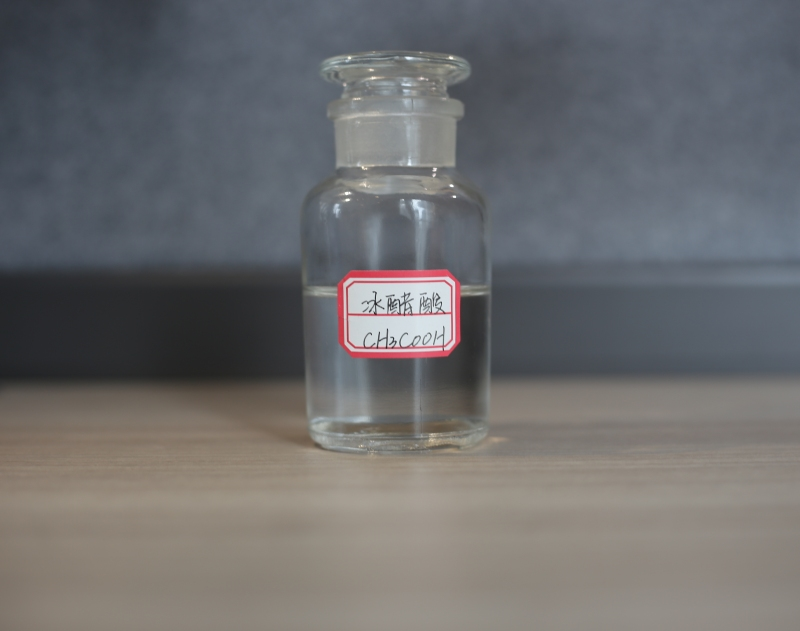
Appearance | Clear, colorless liquid |
Odor Profile | Highly pungent, vinegar-like |
Minimum Assay | > 99.8% |
It acts as a highly hygroscopic substance. It actively absorbs moisture directly from the surrounding air. This characteristic demands strict environmental controls. You must use airtight sealing for all storage containers. If a drum remains open, the chemical pulls ambient humidity inward. This moisture absorption rapidly degrades the crucial >99.8% purity specification. Over time, the freezing point drops, and the chemical reactivity alters.
Corrosivity presents a major infrastructure consideration. The undiluted acid is aggressively corrosive to common metals. It rapidly attacks iron, zinc, and magnesium. Facilities must utilize specialized alloys, such as 316L stainless steel, for piping and storage tanks. Additionally, it exhibits violent reactivity when exposed to strong oxidizers. You must separate it from chromic acid, sodium peroxide, and nitric acid. Proper segregation prevents explosive reactions and catastrophic facility damage.
This versatile chemical serves as a foundational building block. Multiple industries rely on its reactive nature to synthesize consumer goods.
The chemical acts as an essential precursor for vinyl acetate monomer (VAM). Manufacturers polymerize VAM to create polyvinyl acetate. We use polyvinyl acetate daily in commercial paints, industrial adhesives, and paper coatings. Additionally, it is vital for producing purified terephthalic acid (PTA). PTA serves as the core raw material for manufacturing PET plastic bottles and synthetic polyester fibers. Without a reliable supply of high-purity acid, global plastics production would halt.
Pharmaceutical companies utilize it extensively as an acidic solvent. It functions as a critical reagent during drug manufacturing. Chemists rely on it to synthesize antibiotics, essential vitamins, and various active pharmaceutical ingredients (APIs). In this sector, purity is paramount. Trace impurities or unexpected moisture can ruin multi-million-dollar pharmaceutical batches. Anhydrous conditions guarantee precise molecular bonding during complex API synthesis.
When manufactured to exact food-grade standards (E260), it functions safely within the food industry. Producers use it as a highly effective acidity regulator. It also serves as a potent preservative, extending the shelf life of commercial goods. However, food applications require strict compliance. Buyers must verify rigid heavy-metal limits and microbiological safety standards. Any contamination poses immediate consumer health risks.
Sourcing consistent, high-assay materials directly impacts your bottom line. Utilizing an exact 99.8% specification minimizes chemical variability. This consistency sharply reduces batch rejection rates. It eliminates the need to rework flawed product runs. Consequently, manufacturers experience smoother operations. They achieve lower long-term processing costs by minimizing waste and equipment downtime.
Procuring the chemical represents only the first step. You must also implement rigorous safety and storage protocols. Failing to respect its hazardous nature leads to severe consequences.
The 16.7°C (62°F) freezing point creates unique logistical hurdles. Winter transportation requires specialized thermal management. If the material freezes inside a transport tank, unloading becomes impossible. You must deploy actionable thermal solutions. Heated pipelines prevent blockages during internal facility transfers. Industrial drum heaters provide safe, localized thawing. Climate-controlled warehouses ensure the chemical remains in a pumpable liquid state year-round. Never use open flames to thaw frozen containers, as the vapors are flammable.
Reviewing the Material Safety Data Sheet (MSDS) reveals significant workplace hazards. Direct contact causes severe, immediate chemical burns to the skin and eyes. Inhalation of the concentrated vapors damages the respiratory tract. Facilities must install robust engineering controls. Local exhaust ventilation and industrial fume hoods remove harmful vapors from the workspace.
Personnel handling the raw material require specific Personal Protective Equipment (PPE). Standard gear includes:
Heavy-duty, acid-resistant chemical suits.
Thick nitrile or neoprene gloves.
Full-face respirators equipped with organic vapor cartridges.
Chemical splash goggles combined with face shields.
Environmental agencies strictly regulate this substance. The Resource Conservation and Recovery Act (RCRA) categorizes its disposal as hazardous waste. Employers must adhere to strict OSHA exposure limits. The Permissible Exposure Limit (PEL) stands at just 10 parts per million (ppm) over an 8-hour shift. Facilities must establish clear spill response protocols. Operators should neutralize minor spills using sodium carbonate or sodium bicarbonate before initiating clean-up procedures.
Selecting a reputable chemical supplier mitigates operational risk. Procurement teams must look beyond simple pricing structures. Evaluating vendors requires a thorough technical review.
Verify Quality via COA: Always demand a detailed Certificate of Analysis. Do not accept a generic specification sheet. Check that the exact assay confirms >99.8% purity. Review the trace impurity limits carefully. Chlorides must remain below 1 ppm. Sulfates should be less than 1 ppm. Iron content must test below 0.5 ppm to prevent catalytic interference during your production runs.
Evaluate Packaging Scalability: Match the packaging option to your facility consumption rate. Smaller operations typically utilize High-Density Polyethylene (HDPE) drums holding 200 liters. Medium-scale facilities benefit from 1000-liter IBC Totes. Large continuous manufacturing plants require bulk ISO tanks. Regardless of size, confirm that all containers possess proper UN certification for hazardous transport.
Assess Supplier Reliability: A strong vendor provides supply chain transparency. They guarantee batch-to-batch consistency over long contracts. Ask potential partners about their logistical contingencies. Determine if they offer emergency technical support. A reliable supplier will assist you with unexpected safety incidents or specific formulation challenges.
Successfully utilizing glacial acetic acid requires balancing its immense chemical utility against significant operational risks. You cannot treat it like a standard commodity solvent. Its high purity, unique freezing point, and corrosive nature demand specialized infrastructure.
Integration succeeds only when procurement standards align perfectly with facility handling capabilities. You must source rigorous COAs while ensuring your warehouse maintains adequate thermal controls. Neglecting either side compromises your manufacturing efficiency and employee safety.
Take proactive steps to secure your chemical supply chain today. Contact a dedicated chemical specialist to discuss your precise grade requirements. Request an official sample to test within your specific formulation. Finally, download updated technical data sheets to verify compatibility with your existing processing equipment.
A: The primary difference is water content. Glacial refers to the anhydrous form, maintaining at least 99.8% purity. Regular industrial acetic acid is a diluted aqueous solution, typically containing around 80% acid and 20% water. The lack of water in the glacial grade makes it crucial for moisture-sensitive chemical syntheses.
A: It freezes into solid crystals at 16.7°C (62°F). To thaw it safely, you must use slow, controlled ambient heating. Industrial drum heaters or climate-controlled rooms work best. You should never use open flames or direct high-heat sources, as the chemical vapors are highly flammable.
A: Yes, it is a highly hazardous material. It carries severe flammability and corrosivity ratings. Direct contact causes deep chemical burns to the skin and eyes. Inhaling its pungent vapors damages respiratory tissues. Handling requires strict engineering controls and specialized acid-resistant PPE.
A: When stored properly, it remains chemically stable for years. However, it is highly hygroscopic. If the storage container lacks an airtight seal, the liquid quickly absorbs moisture from the air. This moisture degrades the purity level over time, altering its freezing point and reactivity.