Views: 154 Author: Site Editor Publish Time: 2026-08-17 Origin: Site
Selecting between glacial acetic acid and standard aqueous solutions goes far beyond simply choosing a concentration level. For procurement managers, lab directors, and chemical engineers, this critical decision dictates your required storage infrastructure, compliance frameworks, and overall operational safety. Both chemical variations share the exact same molecular formula, CH3COOH. However, the absence or presence of water as a solvent fundamentally changes your handling protocols, reaction limitations, and application constraints.
Using the wrong grade can lead to crystallized piping systems, ruined syntheses, or severe safety hazards. The chemical industry demands strict adherence to material compatibility. Misunderstanding these differences often results in damaged equipment and costly production downtime. This article provides a strictly technical and commercial evaluation framework to help buyers source the correct chemical grade. You will explore the critical differences in physical properties, safety thresholds, and supply chain logistics required to make a secure, optimal purchasing decision for your facility.
Concentration Threshold: Glacial acetic acid is anhydrous (undiluted), requiring a purity of 99.5% or higher, whereas standard acetic acid contains varying percentages of water.
Storage Realities: Glacial grade freezes at 16.6°C (62°F), requiring temperature-controlled infrastructure to prevent crystallization and container damage.
Safety & Compliance: The anhydrous nature of glacial acetic acid makes it highly corrosive and flammable, triggering stricter hazmat transport and OSHA/EPA storage guidelines.
Procurement Logic: Buying glacial and diluting on-site reduces bulk shipping costs, but requires robust facility safety protocols and precise handling capabilities.
Clarifying the baseline chemistry helps prevent costly procurement errors. Many buyers assume they can easily swap different concentrations. This assumption often leads to severe operational bottlenecks. Understanding exact chemical definitions establishes a strong foundation for safe handling.
Industry professionals define standard acetic acid by the explicit presence of water acting as a solvent. The water molecules interact actively alongside the CH3COOH molecules. This interaction lowers the overall freezing point and modifies the chemical's reactivity. Concentrations typically range widely based on the intended use case. You will find 5% solutions sold as common household vinegar. Meanwhile, industrial applications frequently rely on heavier 50% to 80% concentrations. Because they contain water, these solutions remain relatively stable at cooler temperatures. They also present fewer flammability risks compared to their purer counterparts.
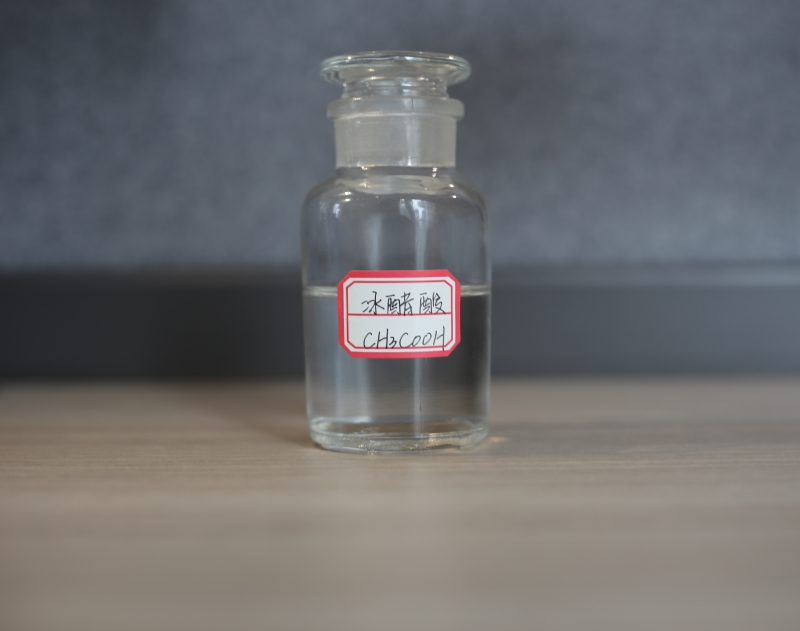
Chemists define glacial acetic acid as an anhydrous compound containing greater than 99.5% pure CH3COOH. The term "anhydrous" means it contains virtually no water. This high purity level creates distinct physical behaviors. You might wonder about the origin of the term "glacial." It derives directly from its tendency to form solid, ice-like crystals at relatively high room temperatures. When the ambient temperature drops below 16.6°C (62°F), the pure liquid solidifies into heavy, clear crystals. This unique physical trait demands specialized handling protocols across all manufacturing environments.
Evaluating the physical properties of these chemicals requires a close look at how they behave under operational stress. Temperature, water content, and flow characteristics dictate how you must engineer your facility.
Water completely changes how acetic acid behaves during complex syntheses. In specific synthetic processes, such as polymer production, water acts as a destructive impurity. It can terminate polymer chains prematurely or cause unwanted side reactions. Many organic reactions strictly require an anhydrous environment to proceed correctly. If you introduce a standard aqueous solution into an air-sensitive or moisture-sensitive reaction, the synthesis will likely fail. You must use the glacial grade to ensure moisture does not compromise the final chemical yield.
The starkest operational difference between these two chemicals involves their freezing points. The glacial grade freezes rapidly at 16.6°C (62°F). In contrast, a standard 80% aqueous solution freezes at much lower temperatures, typically around -7°C (19°F). This higher freezing point presents a massive physical expansion risk. When the glacial chemical crystallizes inside drums or IBC totes, it expands. This expansion can easily rupture standard packaging, leading to catastrophic leaks once the material thaws. Operators must monitor ambient facility temperatures constantly.
Density and fluid dynamics play a minor but vital role when pumping these chemicals through manufacturing pipelines. The anhydrous grade holds a slightly higher density (1.049 g/cm³) compared to dilute solutions. It also exhibits slightly different viscosity curves. When engineers design piping systems, they must account for these minor handling differences. Pumping pure, undiluted acid requires calibrated pump seals. The fluid resists flow differently depending on ambient temperature fluctuations. Recognizing these traits ensures optimal pump performance and prevents premature mechanical seal failures.
Table 1: Physical Properties Comparison
Property | Glacial Acetic Acid (>99.5%) | Standard Acetic Acid (80% Aqueous) |
|---|---|---|
State at 20°C | Liquid (Close to freezing point) | Liquid |
Freezing Point | 16.6°C (62°F) | Approximately -7°C (19°F) |
Boiling Point | 118°C (244°F) | Varies (Closer to 100°C) |
Water Content | < 0.5% | 20% |
Flash Point | 39°C (102°F) - Flammable | Generally non-flammable |
Selecting the correct chemical directly impacts your final product quality. We must map the specific chemical grade to the required industrial outcome. Different sectors demand vastly different purity levels.
Highly controlled chemical environments rely entirely on the anhydrous grade. You should specify this purity level for the following critical applications:
Manufacturing of VAM: Facilities require pure grade to produce vinyl acetate monomer. VAM serves as a critical building block for adhesives and paints.
Solvent Usage: Analytical chemistry and organic synthesis rely on it as a highly polar protic solvent. It stabilizes certain reactions perfectly.
PTA Production: The plastics industry uses it to produce purified terephthalic acid (PTA). PTA is mandatory for creating PET plastics used in bottling.
Acetic Anhydride Synthesis: Producing acetic anhydride requires a strictly moisture-free environment to prevent immediate hydrolysis.
Many industries do not need ultra-pure formulations. In fact, using the highly concentrated grade could prove excessively dangerous or unnecessary. You should opt for standard aqueous solutions in these scenarios:
Food and Beverage Formulations: Food production requires highly diluted, food-grade solutions to create safe flavor profiles and preservatives.
Textile Dyeing: The textile industry uses dilute solutions in their dyeing and finishing processes. The water content aids in penetrating fabric fibers evenly.
Agricultural Treatments: Farmers utilize dilute mixtures for weed control and specific soil treatments.
General pH Adjustment: Wastewater treatment plants use aqueous grades to manage pH levels where excess water content does not interfere with the process.
Addressing the operational reality of housing these chemicals is paramount. Your facility must protect personnel and the surrounding environment from potential exposure. Handling concentrated acids requires meticulous engineering controls.
The hazard profiles differ significantly between the two chemical states. Glacial acetic acid acts as a severe corrosive agent. Immediate contact causes severe skin burns and permanent eye damage. Furthermore, it produces hazardous vapors. Inhaling these concentrated vapors can permanently damage respiratory tracts. It also carries a flash point of 39°C (102°F), classifying it strictly as a flammable liquid. Standard solutions, varying by concentration, generally exhibit lower volatility. They present reduced vapor pressure and lack the severe flammability risks associated with the pure compound.
You cannot store the pure grade in a standard unheated warehouse. Doing so during winter months guarantees crystallization and ruined containers. Facilities must install heated or climate-controlled storage areas to maintain temperatures consistently above 18°C. Beyond temperature control, material compatibility remains critical. You must use approved materials for all tanks, gaskets, and piping. Stainless steel 316L and specific high-density plastics perform exceptionally well. Conversely, you must strictly avoid standard mild steel. Mild steel will corrode rapidly, contaminating your product with iron and causing catastrophic tank failures.
Regulatory agencies monitor the storage and transit of concentrated acids rigorously. Facilities must ensure strict standard SDS (Safety Data Sheet) adherence. For pure grades, personnel must wear highly specific PPE. Standard dust masks offer zero protection. Workers need approved organic vapor respirators, heavy-duty acid-resistant suits, and full face shields. Furthermore, shipping the pure product triggers complex hazmat transport regulations. Department of Transportation (DOT) guidelines require specific placarding, specialized driver certifications, and robust spill containment protocols.
Procurement teams face significant logistical hurdles when sourcing these materials. A successful strategy requires balancing your facility's technical capabilities with vendor reliability. You must assess exactly what your chemical plant can handle safely.
Many facilities debate whether to buy the pure grade and dilute it internally or purchase pre-mixed solutions. This decision rests entirely on your facility capabilities. Does your facility possess safe, automated mixing equipment? Diluting strong acids generates immense heat due to an exothermic reaction. You need precise cooling mechanisms, such as chilled water jackets, to manage this heat safely. Additionally, you need robust QA processes. If your lab cannot precisely verify the final concentration using Karl Fischer titration or specific gravity checks, you should purchase pre-mixed aqueous solutions directly from the manufacturer.
Vetting chemical suppliers requires looking past raw material availability. You need partners who prioritize safety and verifiable quality. Use the following criteria when shortlisting your suppliers:
Purity Certifications: Demand immediate access to a Certificate of Analysis (CoA) for every batch. The CoA must verify strict limits on heavy metals and moisture content.
Packaging Options: Evaluate their container flexibility. Can they deliver in high-density polyethylene drums, IBC totes, or bulk stainless steel tankers based on your consumption rate?
Cold-Weather Contingencies: The supply chain often halts during winter. Your vendor must offer specialized cold-weather shipping contingencies, such as insulated trailers or internally heated transit tanks.
The choice between glacial acetic acid and standard aqueous solutions ultimately hinges on your specific chemical reaction requirements and internal facility infrastructure. Understanding these core differences prevents catastrophic equipment failure and guarantees smoother chemical syntheses. Procurement managers and engineers must align their purchasing strategies with their physical storage capabilities.
To ensure a safe and effective procurement process, consider the following action-oriented next steps:
Audit your current storage capabilities, paying specific attention to ambient temperature controls and drum heating infrastructure.
Review your internal safety protocols and verify your facility stocks the correct organic vapor PPE and acid-spill containment kits.
Consult your engineering team to confirm all piping and tank materials meet strict stainless steel 316L or high-density plastic requirements.
Reach out to your chemical supplier to request a detailed technical data sheet (TDS) for specific concentration availability.
A: No. Vinegar is typically a 4-8% dilute solution of acetic acid. Glacial is strictly >99.5% pure and highly dangerous if handled like vinegar.
A: Always add acid to water slowly under controlled, ventilated conditions to manage the exothermic (heat-releasing) reaction. Never add water directly to the concentrated acid.
A: It crystallizes at 16.6°C (62°F). It must be slowly and safely warmed using approved drum heaters to return to a liquid state without compromising the container.